Notes on Polygamy

detail of “Bathsheba” by Hayez

There’s something irresistible about the endnotes of a good book. In the course of an argument, one comes to trust a writer’s judgments and his judiciousness about sources—precursors, precedents, and pathfinders. So a favorable mention of an author or book in an endnote or an annotated bibliography provides further lines of exploration of the topic at hand, often yielding a genealogy of sound thought.

Continue reading “Notes on Polygamy”

Alan Jacobs and the Book of Common Prayer

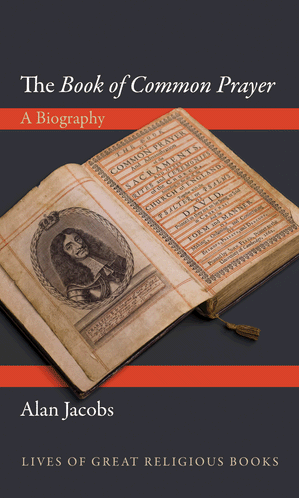
Screen shot 2014-06-11 at 9.48.16 PMAlan Jacobs, a professor of humanities at Baylor University, has written a beautiful and wise book about The Book of Common Prayer and its many iterations since it’s initial publication by Thomas Cranmer in 1549. It is both a feat of compression, bringing 500 years of history into the scope of some 230 pages, and of scholarship, gracefully knitting together several course strands of literary, liturgical, and ecclesiastical history. And yet somehow Jacobs maintains an effortlessness, a gracefulness of style, that is rare in academia. Continue reading “Alan Jacobs and the Book of Common Prayer”

Scouting for Books

Here is a list of recent and forthcoming books that I discovered at last week’s BookExpoAmerica (#BEA14). Attendance was down slightly this year, and several major publishers chose not to attend, including Oxford, Cambridge, the University of Chicago Press, Encounter Books, and Christian publishers such as Baker and IVP. While there were several things on offer that piqued my interest, I didn’t see any real breakout titles besides Thomas Piketty’s Capital (Harvard University Press). There’s hope for 2015, though, since it starts with the publication of a new Bible translation by Robert Alter (see below). Continue reading “Scouting for Books”

Year One

Screen shot 2014-05-19 at 7.51.13 PMEarlier this month, Note and Query passed its one year anniversary. It began largely as an experiment, with a post about the significance of the ascension of Jesus. At a pace of about one post every other week (31 in 52 weeks), it has continued on a semi-regular basis, prompted only by time and inclination. Not bad, I say, for co-habitating with a full-time job, three young children, and a serious need for downtime (as in, not otherwise engaged in writing, editing, or reading)!

For the most part, it has been a good experiment. Writing has come more naturally to me than I anticipated. To paraphrase an apocryphal quote, I write to know that I am not alone. Both here and on Twitter (@noteandquery), I have tried to engage in conversations with writers, both living and dead, who have sought honest answers to tough questions. I have also tried to focus on works of art and literature that inspire, edify, and sustain us. In that, I think I have succeeded in making a blog that is about things that resonate with me personally but isn’t fundamentally about me. It’s a tricky line to walk at times, since we all inevitably filter the world through our own taste and interests. What is the alchemy that converts a private motive or meaning into a public good?

To keep track of my posts, I recently added an index page as well as an honor roll of books that have influenced my thinking since college. I’ve tried to learn something about the medium—currently WordPress—but to focus on the technical aspects is to miss the fun.

It is my hope that I will keep up this blog for another year, perhaps upping the frequency a bit. But I also hope to press myself to write more widely and more extensively about books, films, and ideas that clear my eyes and fill my heart as I learn to live for the Lord more fully each and every day.

C. S. Lewis on forgiveness

Randy David Newman quoted from this passage about forgiveness during a sermon today.  I thought it warranted redistribution:

There is all the difference in the world between forgiving and excusing. Forgiveness says, “Yes, you have done this thing, but I accept your apology; I will never hold it against you, and everything between us two will be exactly as it was before.” But excusing says, “I see that you couldn’t help it or didn’t mean it; you weren’t really to blame.” If one was not really to blame, then there is nothing to forgive. In that sense forgiveness and excusing are almost opposites.

Continue reading “C. S. Lewis on forgiveness”

Redeeming the Heart of Aronofsky’s Noah

It’s been a month since the release of Darren Aronofsky’s film Noah, and just this week it fell out of the top 10 for box office sales. Given the sad shape of the competition (The Lego Movie not withstanding), that’s disappointing news, particularly since much of its core audience, professing Christians, didn’t bother to give it a fair shake.

For an art film, I’ve been surprised to see so little critical engagement with the film. Christians reviewers were, for the most part, dismissive (or downright laughable), while others have damned the film with feint praise. The most in-depth discussion of the film, released in early April, turns out to be almost completely wrong, even though its thorough demolition alerted me to the insightful and penetrating critic Peter T. Chattaway, whose reviews and blog posts are well worth reading. Continue reading “Redeeming the Heart of Aronofsky’s Noah”

Reading Through Grief

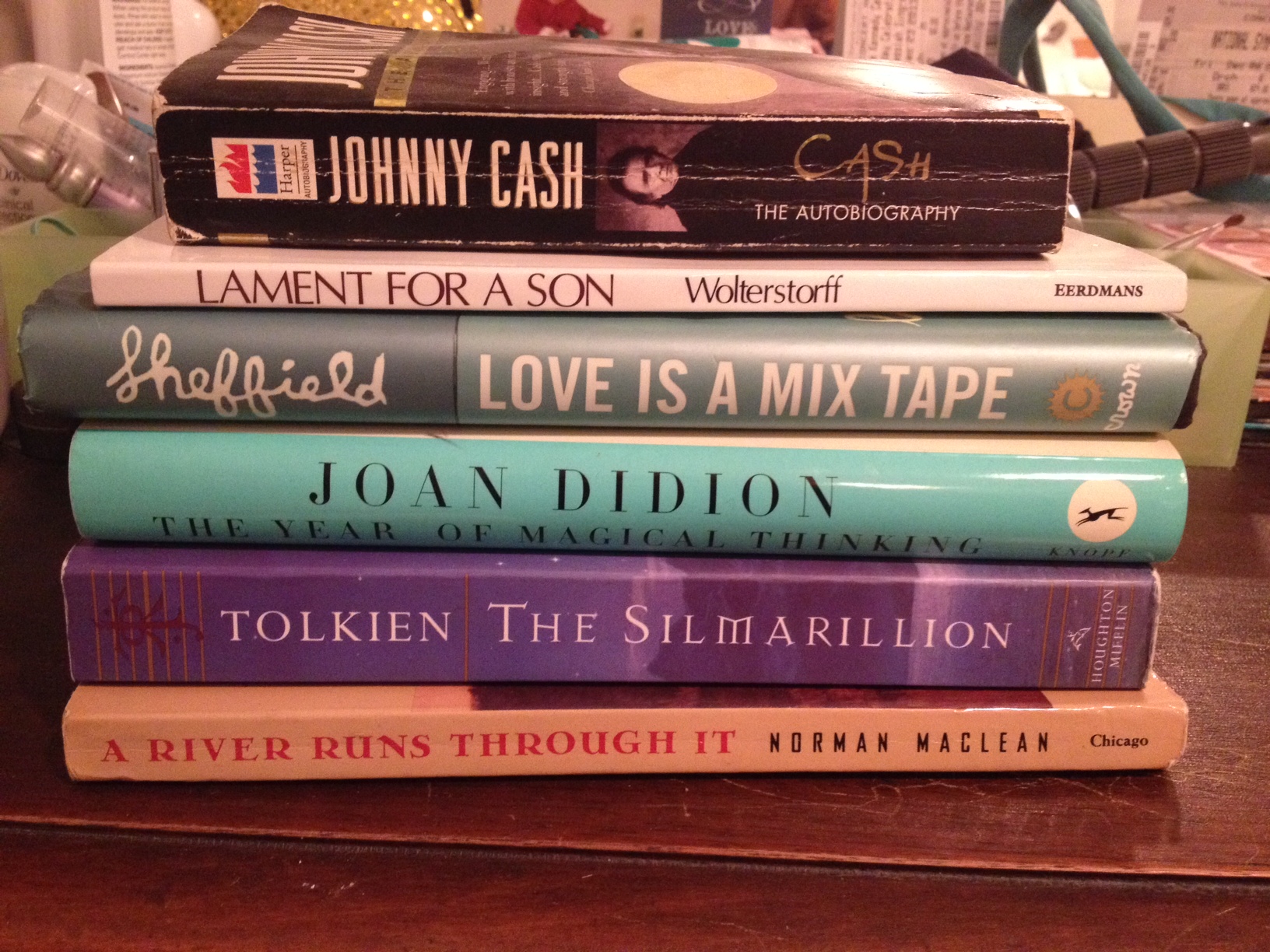
photo-26Shortly after my father died, a friend at work offered me a lovely gift, her reading list of books about mourning and fathers. She enclosed a photograph of a stack of books. To see them like this, their thoughtful designs and well-worn bindings, was a strange comfort at a time when words seemed unreal or elusive.

Her advice was “to find expression for your own grief through the words of others. . . . It can help to explore the emotions of grief and sorrow by reading other travelers who have been thrust into that same strange land and know the lay of it. Every grief is still unique, just as every love is, but these words from further up and further in can bring strength and comfort—and certainly catharsis.”

Continue reading “Reading Through Grief”

Worship by Default

In his book God Is Not One, Boston University religion professor Stephen Prothero tries to get at the distinctive characteristics of the major world religions by setting out a key problem that each tries to solve. The problem in Christianity is sin; the solution, or goal, is salvation. In Prothero’s telling, “sin refers more generally to the human propensity toward wrongdoing and evil. . . But happily Christianity is a ‘rescue religion,’ and this rescue was made possible as Jesus was dying on the cross. . . . The ‘good news,’ therefore, is that anyone who hears this story, confesses her sins, and turns to Jesus for forgiveness can be saved. Or, as the Bible puts it, ‘the wages of sin is death; but the gift of God is eternal life in Christ Jesus our Lord’ (Romans 6:23)” (pp. 14, 71–2).

But what is sin? Continue reading “Worship by Default”

Notable Reading

  • Tim Blanning, The Romantic Revolution: A History (Modern Library, 2010)—An outstanding overview of the early 19th-century cultural movement known as romanticism. A writer at the height of his craft, Blanning casts a wide net, surveying a huge corpus of art, literature, and music both in England and the continent, but creates an astonishingly tight and compelling account in a mere 200 pages. Blanning’s history surely trumps M. H. Abram’s 1971 classic The Mirror and the Lamp in its accessibility and scope. It reminded me why I became so fond of the “long eighteenth century” (from which the romantics emerged), and it left me eager to dig into Blanning’s ambitious The Pursuit of Glory.

Continue reading “Notable Reading”

The Fairest Idea

hs-2014-04-a-small_webParagraph 17 from Centuries of Meditations by Thomas Traherne (1637–74):

To know GOD is Life Eternal. There must therefore some exceeding great thing be always attained in the knowledge of Him. To know God is to know goodness; it is to see the beauty of infinite love: to see it attended with almighty power and eternal wisdom; and using both those in the magnifying of its object. It is to see the King of Heaven and Earth take infinite delight in giving. Whatever knowledge else you have of God, it is but superstition. Which Plutarch rightly defineth to be ‘an ignorant dread of His divine power, without any joy in His goodness’. He is not an object of terror, but delight. To know Him therefore as He is, is to frame the most beautiful idea in all worlds. He delighteth in our happiness more than we; and is of all other the most lovely object. An infinite Lord, who having all riches, honors, and pleasures in His own hand, is infinitely willing to give them unto me. Which is the fairest idea that can be devised.

HT: David Bentley Hart.