On Getting Out of Bed by Alan Noble

There’s no getting around it: I bought this book for its title. I knew something about its author. He wrote two books that I’ve heard good things about but haven’t read, and he is a part of an organization called the & Campaign, a coalition of Christians who are committed to engaging the sociopolitical arena with “compassion (&) conviction.” So I had some indirect reasons to trust the author, but the backstory didn’t matter. I knew what I was looking for—better reasons to get out of bed.

Most days I get out of bed in the morning because I am in pain. I have little tolerance for the transition between waking and rising; I don’t lie in bed awake but for a minute or two. Whether its an arthritic shoulder or neuropathy in my hands and feet, I usually leave my bed to put body in another position to relieve the focus of my mind on my physical symptoms. Being upright but unsteady, I don’t feel tremendous relief, but the promise of a cup of coffee and perhaps some quiet reading offer some inducements, before I have to downshift into the now-rote logistics of morning parenting and the particulars of the day before me.

My day also begins with a judgment—what my doctors refer to as “good control.” I am a type 1 diabetic, and so every morning also begins with a number. If my blood sugar is less than 120, then the message I receive is: “Great job! You’ve managed to stave off long-term complications for another day.” If it’s higher, sometimes much higher than that, the message is defeat, starting the day on my back foot, already compensating for my apparent incompetence in mimicking what others’ pancreases do naturally, in controlling for the intricate interactions between food, exercise, and metabolism. In my case, I also “get to” wrestle with the lawyer-permitted algorithms of my insulin pump.

On those mornings, it feels hard to affirm with the Psalmist that the Lord’s mercies are made new every day. I feel as if I am in a hell of my own making—that is, if my doctors are to be believed. “Just control your blood sugar,” one doctor encouraged me. Just . . .

It wasn’t always so. I remember lying in bed reading for hours in my twenties. Those early hours in bed were a time for a vigorous mental workout. (And I wasn’t even a regular coffee drinker then.) Immersing myself in a thick 19th-century novel or a work of literary criticism or a classic philosophy text would somehow prepare me to go out into the world a bit more sure of myself. Dwelling in the thoughts of others felt akin, naturally adjacent, to the realm of sleep and dreaming, which can be both familiar and alien.

Two books I devoured in those days described diametrically opposed experiences of waking. Kafka’s Metamorphosis (1915) lurches his narrative forward with stark difference: “As Gregor Sansa awoke one morning from uneasy dreams, he found himself transformed in his bed into a monstrous vermin.” Is it possible that this transformation is a fantasy rather than a nightmare? In spite of his physical deformity, Samsa has escaped the deadening sameness of everyday life, and he “gets to” confront the existential challenges of going about his day with startlingly fresh perspective. I suspect Kafka’s fictional experiment has much to say about our rote reasons for (not) getting out of bed.

In a different register, Paul Bowles’s Sheltering Sky (1949) opens with the experience more recognizably our own: “He awoke, opened his eyes. The room meant very little to him; he was too deeply immersed in the non-being from which he had just come. If he had not the energy to ascertain his position in time and space, he also lacked the desire. He was somewhere, he had come back through vast regions from nowhere; there was the certitude of an infinite sadness at the core of his consciousness, but the sadness was reassuring, because it alone was familiar.”

I suspect that it is this sameness—the realization that our rapidly receding dreams are only a momentary escape from the circumstances of our lives—that undergirds a familiar sadness upon waking.

Some thirty years later, I hoped I would find a set of instructions, or perhaps a rousing sermon, on how to face the day ahead. That’s lot to put on the author of a book that’s only 104 generously typeset pages, but that’s perhaps what makes the book all the more remarkable. Noble offers a set of bundled reflections on “the burden and gift of living”—the subtitle I had willfully overlooked.

Owing to the book’s brevity, I don’t want to say too much. But what makes it unique among books on this topic is that it doesn’t offer simple solutions or promise a resolution of the dilemma but instead offers the gift of mercy that extends from faith in Christ.

In order to arrive at that point, Noble needs to clear the well-trod path of cliches and simple solutions. Here he is very clear-eyed about the limits of—or our expectations from—the mental health establishment. Early in the book he observes: “We desperately want mental illnesses to be as objectively diagnosable, measurable, and treatable as something like diabetes.” I had to bite my tongue on the last adjective in that string, “treatable”—just control it—but he’s not wrong that those with diabetes can measure something concrete and align it with cause and effect.

Contrary to some people’s expectations, he writes, “The best mental health professionals are not scientists who offer precise, empirically objective diagnoses but students of the human heart and soul. They do not provide a taxonomy and rational explanation for your suffering but intuit with wisdom and compassion. They attend to you personally. By grace they may sketch out the contours of your suffering, but sometimes little more than that. They offer a sympathetic ear, wise advice, and ameliorating treatments, but only rarely something like a medical cure.”

Setting expectations both higher (wisdom conveyor) and lower (not an exact science) illuminates why a good therapist may be hard to find.

Medication isn’t a panacea, either. “Psychiatrists can sometimes prescribe a medication that helps lessen your suffering, but disturbingly, we aren’t sure how or why many popular antidepressants work. And some drugs seem to have a higher likelihood of producing awful side effects than doing the one thing they are supposed to do.”

They’re not like insulin, in other words. (And nobody has explored in greater depth the decidedly mixed results of—and the plateaued efforts to develop—psychiatric drugs than sociologist Andrew Scull. See his recent book Desperate Remedies.)

Later, Noble perceptively observes:

With mental illness, there is no neck brace to visually communicate the burden you’re carrying. And there are almost no objective limits. There’s no way for a psychologist to objectively measure your agency or your capacity to work. They can make recommendations, even wise recommendations, but they fundamentally can’t separate your abilities from your illness. That means you have to live in the space of uncertainty between the knowledge that your illness limits your agency and the knowledge that you still have agency-between the responsibility to rely on others and the responsibility to care for others. Any way you try to avoid this tension will end in more harm. If you refuse to have grace for yourself or to accept help from others, you will fall deeper into despair and have less and less strength to care for those around you. If you refuse to accept and act on your responsibility to care for the people around you, you will lose yourself in your own helplessness.

Whoa. These are subtle points that require slow reading to fully appreciate. They show a startling self-awareness and an acute applicability to others’ situations, including my own.

Already here, the key or the response—if not quite an answer—lies in the word grace. Noble perceives the aura of this word as the giftedness of life. The message extends from his previous book, Your Life Is Not Your Own, which unfolds the implications of St. Paul’s countercultural assertion that “You are not your own” (1 Corinthians 6:19). Drawing on Psalm 139:13–14, Romans 8:16–17, and Galatians 2:20, Noble argues that our self-worth is not found in ourselves or our achievements but rather in our belonging to God and our purpose in his kingdom.

As summarized by one perceptive reviewer, “This Christian anthropology magnifies our humanity, because we are drawn to a covenantal relationship with the Creator who designed us and intended us to belong to him. As Christians, we are united to Christ through his atoning death, such that our identity is Christ.”

Pushing these themes further, On Getting Out of Bed is applied and personal. It applies Noble’s earlier insights to those, including himself, who feel their own efforts to live out that promise are hampered by emotional or physical disability.

In the end, the book provided a solace and a comfort that not only exceeded my expectations but also changed them. In a similar vein, T. S. Eliot wrote, “I said to my soul, be still, and wait without hope / For hope would be hope for the wrong thing; wait without love, / For love would be love of the wrong thing; there is yet faith / But the faith and the love and the hope are all in the waiting. / Wait without thought, for you are not ready for thought.” Shifting our expectations, it turns out, has a profound effect on our ability to act. Unbidden from unrealistic expectations of ourselves, or of our therapists and doctors, we can begin learning to walk in light.

On Getting Out of Bed reads like a letter from a old friend—one that I will likely revisit from time to time, when I need gentle reminders, in the midst of suffering, psychological distress, or illness, of how to face the day ahead.

Beyond the book, I find that my own practice of getting up in the morning requires a few intermediate steps. I need to pull myself down from the abstractions of my dreams and to reattach to my body. I need to, in the simple opening prayer of the Lectio 365 app, “recenter my scattered senses upon the presence of God.”

Beyond the awareness of pain upon waking, I need to be aware of my own breathing and other dimensions of sense experience. Like a someone walking down a rapid heart rate, I force myself to focus on what I am seeing, hearing, smelling, touching, and tasting, each one after the other in a slow progression. So it’s the patter of rain against the pane of glass, the coarseness of an old wool blanket, and the smell of my wife asleep next to me that awaken me to reality waiting beyond my own rapid-cycling thoughts.

Some might call this intermediate step “mindfulness.” Whatever it is called, being fully alive to one’s body, even one’s pains, helps to establish the “I” that takes the first steps out of bed and that responds to others.

In the rhythm of my mornings, I have also found that there are definitely things one should not do: Don’t look in the mirror. Don’t step on the scale. Don’t remain in bed perseverating on the remnants of an anxiety dream. Don’t ignore the needs of others. And don’t (immediately) turn on my phone or computer.

With this last admonition, I find surprising intersections between Noble’s book and Andy Crouch’s book The Tech-Wise Family. Crouch recommends upon waking putting distance between ourselves and our ubiquitous screens:

Rather than rolling over to check for whatever flotsam and jetsam arrived in the night, get up and do something—anything—before plugging in. Stretch. Shower. Open the front door for a moment and breathe the morning’s air, humid or frigid as it may be. Make coffee or tea and wait for the brew to finish. There is something for you to discover in these moments just after waking that you will never know if you rush past it an almost-forgotten dream, a secret fear, a spark of something creative. You’ll have the rest of the day tethered to the impatient wider world; let that wait a moment. Give your devices one more minute in their “beds.” Practice the grateful breath of someone who slept and awakened, given the gift of one more day. You slept and allowed God to be enough. Now, for at least a moment, wake and be still, letting him be enough for this day. Then you can say good morning to whatever the day brings.

Crouch’s recommendations pair nicely with Noble’s, in shared wisdom about human nature in the light of Christ.

With this greater awareness of self, in all its sensorial glory, I can rise and interact with others and acknowledge the presence of God.


New Books!

The words of the wise are like goads and like nails driven in — from the composers of collections, given from a certain shepherd. And more than these, my son, beware: of making many books there is no end, and much chatter is weariness of the flesh.

Qohelet (Ecclesiastes) 12:11-12 (trans. by Robert Alter)

Every year, BookExpo showcases books slated for release in the fall and beyond, drumming up buzz among independent booksellers, librarians, and the like. The books listed below, both recent and forthcoming, looked to be of greatest interest to readers of serious nonfiction.

A few observations from the show:

  • In my humble opinion, some of the best academic work across the board continues to be published by Princeton University Press, followed closely by Yale and Harvard. Nebraska and Minnesota remain interesting smaller presses.
  • Other academic presses, being focused on niche audiences or on monographs that sell at high prices to academic libraries, seem to have lost their ability to appeal to cross-over audiences. Chicago and California, mired in academic fads and fancies, seem to be shadows of their former glorious selves.
  • Among commercial publishers, W. W. Norton stood out at the show as standing by high-quality content while taking some risks on lesser-known but deserving authors and their books.

Language and Literature

Peter Martin, The Dictionary Wars: The Fight over the English Language (Princeton, May)

Ilana Pardes, The Song of Songs: A Biography (Lives of Great Religious Books, Princeton, August)

Peter Mack, Reading Old Books: Writing with Traditions (Princeton, September)

Michael Schmidt, Gilgamesh: The Life of a Poem (Princeton, September)

A. E. Stallings, translator, The Battle Between the Frogs and the Mice: A Tiny Homeric Epic (Paul Dry Books, October)

Christian Wiman, editor, Joy: 100 Poems (paperback release, Yale, November)—I missed this when it was published in 2017.

Biography and Memoir

Andrew Gant, Johann Sebastian Bach (SPCK, October 2018)—I missed this when it was published last year.

Carlos Eire, The Life of Saint Teresa of Avila: A Biography (Lives of Great Religious Books, Princeton, June)—His history Reformations is magisterial.

Thomas Chatterton Williams, Self-Portrait in Black and White: Unlearning Race (W. W. Norton, October)

John Took, Dante (Princeton, January 2020)

History

T. H. Breen, The Will of the People: The Revolutionary Birth of America (Princeton, September)

George Weigel, The Irony of Modern Catholic History (Basic Books, September)

David Sorkin, Jewish Emancipation: A History Across Five Centuries (Princeton, September)

Roel Sterckx, Ways of Heaven: An Introduction to Chinese Thought (Basic Books, September)

Martin Goodman, Josephus’s The Jewish War: A Biography (Lives of Great Religious Books, Princeton, October)

Martin Goodman, A History of Judaism (paperback release, Princeton, October)—highly recommended!

Pekka Hamalainen, Lakota America: A New History of Indigenous Power (Yale, October)

* Tom Holland, Dominion: How the Christian Revolution Remade the World (Basic Books, October)

David D. Hall, The Puritans: A Transatlantic History (Princeton, November)

Alec Ryrie, Unbelievers: An Emotional History of Doubt (Harvard, November)—Ryrie will also publish The Reformation in England: A Very Brief History (SPCK, August).

Religion

Joel Baden, The Book of Exodus: A Biography (Lives of Great Religious Books, Princeton, April)

Phillip Cary, The Meaning of Protestant Theology: Luther, Augustine, and the Gospel That Gives Us Christ (Baker Academic, June)

John Collins, What Are Biblical Values?: What the Bible Says on Key Ethical Issues (Yale, August)

Iain Duguid, The Whole Armor of God: How Christ’s Victory Strengthens Us for Spiritual Warfare (Crossway, August)

Paula Frederiksen, When Christians Were Jews: The First Generation (paperback release, Yale, August)—This book didn’t receive enough attention.

Edward L. Greenstein, Job: A New Translation (Yale, August)—I’ll bite, but it’s claim that “no English translation has come close to conveying the proper sense of the original” is difficult to believe, with Robert Alter’s, X’s, and Cline’s translations all on the market for years now.

Michael LeFebvre, The Liturgy of Creation: Understanding Calendars in the Old Testament Context (IVP Academic, August)

David Bentley Hart, That All Shall Be Saved: Heaven, Hell, and Universal Salvation (Yale, September)

David Bentley Hart, The New Testament: A Translation (paperback release, Yale, October)—I’ll be curious to see if there are any differences from the first printing.

J. Ryan Lister and Anthony Benedetto, Emblems of the Infinite King: Entering the Knowledge of the Living God (Crossway, October)—illustrated book for kids ages 8-14, warrants comparison with The Bible Project books

Jack Miles, Religion as We Know It: An Origin Story (W. W. Norton, November)

Economics

Greg Forster, Economics: A Student’s Guide (Crossway, August)—A Christian perspective on (more or less) mainline economics

Lawrence Glickman, Free Enterprise: An American History (Yale, August)—A Cornell historian’s view

Deirdre McCloskey, Why Liberalism Works: How True Liberal Values Produce Freer, More Equal, Prosperous World for All (Yale, October)

Thomas Philippon, The Great Reversal: How America Gave Up on Free Markets (Harvard, October)

Abhijit Banerjee and Esther Duflo, Good Economics, Bad Economics: Six Ways We Get the World Wrong and How to Set It Right (PublicAffairs, November)

Interview with Sarah Ruden

In the past month, I interviewed Sarah Ruden about her new book, The Face of Water: A Translator on Beauty and Meaning in the Bible (published by Pantheon Books), and her new translation of St. Augustine’s Confessions (published by The Modern Library). The two interviews can be found here and here, respectively.

In the run up to the interviews and in their wake, Sarah and I traded messages about Augustine, the Bible, and other topics. Sarah kindly granted me permission to reproduce parts of our exchange here in an edited format.

Garrett: I can’t help but begin by asking: Is there a work of Greek or Latin literature that is unduly overlooked? Or, to put a different spin on the question, is there a work of Greek or Latin literature that should be better known or more widely read by Christians?

Sarah: I’m an interested party, because I’ve translated this work myself, but still I can’t resist recommending Apuleius’s Golden Ass, a comic novel of the mid-second century A.D. The book gives vivid pictures of ordinary people’s lives at a time of great growth in Christianity. Also, the story is full of moral and religious themes and offers the most detailed account to date of a religious conversion; the conversion is to the worship of the goddess Isis, but the differences from and similarities to Christian conversions are fascinating in themselves.
Continue reading “Interview with Sarah Ruden”

Interview with Marc Brettler

Screen Shot 2016-01-19 at 10.08.15 PM
cover of the second edition

This transcript is a lightly edited version of an interview that took place on September 1, 2015, and retains its oral style.

Interviewer: Hello. Welcome to New Books and Biblical Studies, where we look at New Books about the Bible—from modern day commentaries and art books to scholarly monographs and reference works.

On today’s program, I’m talking with Marc Brettler about the second edition of The Jewish Study Bible, published by Oxford University Press, which he co‑edited with Adele Berlin.

Professor Brettler is Bernice and Morton Lerner Professor of Judaic Studies at Duke University’s Center for Jewish Studies, and member of Duke’s Department of Religious Studies. From 1986 to 2015, he taught Near Eastern and Judaic Studies at Brandeis University, and since 2001 was the Dora Golding Professor of Biblical Studies. Continue reading “Interview with Marc Brettler”

Fall 2015 books

At BookExpo two weeks ago, I had a chance to preview some of the forthcoming titles in the fall 2015 season. Here is a select list of books that looked the most promising.

August

Raymond Tallis, The Black Mirror: Looking at Life through Death (Yale UP)—the author of Aping Mankind: Neuromania, Darwinitis and the Misrepresentation of Humanity

September

Mark Edmundson, Self and Soul: A Defense of Ideals (Harvard UP)

Aviya Kushner, The Grammar of God: A Journey into the Words and Worlds of the Bible (Spiegel & Grau)

Candida Moss and Joel Baden, Reconceiving Infertility: Biblical Perspectives on Procreation and Childlessness (Princeton UP)

October

Leo Damrosch, Eternity’s Sunrise: The Imaginative World of William Blake (Yale UP)

Harry G. Frankfurt, On Inequality (Princeton UP)—from the author who brought you On Bullshit

Philip Jenkins, The Many Faces of Christ: The Thousand-Year Story of the Survival and Influence of the Lost Gospels (Basic Books)

Tom Lewis, Washington: A History of Our National City (Basic Books)

November

Mary Beard, S.P.Q.R.: A History of Ancient Rome (Liveright/Norton)

Craig Koester, Revelation: A New Translation with Introduction and Commentary (Anchor Yale Bible Commentaries)—paperback release

Jon D. Levenson, The Love of God: Divine Gift, Human Gratitude, and Mutual Faithfulness in Judaism (Princeton UP)

John P. Meier, A Marginal Jew: Rethinking the Historical Jesus, Volume V: Probing the Authenticity of the Parables (Anchor Yale Bible Reference Library)—in which he argues that only four parables—those of the Mustard Seed, the Evil Tenants, the Talents, and the Great Supper—can be attributed to Jesus with certitude.

December

Diana Fuss and William Gleason, The Pocket Instructor: Literature: 101 Exercises for the College Classroom (Princeton UP)

Early 2016

J. Richard Gott, The Cosmic Web: Mysterious Architecture of the Universe (Princeton UP)—the author of Sizing Up the Universe (National Geographic, 2012)

Leonard Sax, The Collapse of Parenting: How We Hurt Our Kids When We Treat Them Like Grown-Ups (Basic Books)—the author of Why Gender Matters

Miroslav Volf, Flourishing: Why We Need Religion in a Globalized World (Yale UP)

New Books in Biblical Studies

From the looks of this site, it seems as if I took a hiatus from posting for Lent. Unfortunately, that wasn’t intentional. But I have been focused on a new endeavor—becoming a host for the New Books Network. My “channel” is New Books in Biblical Studies, and my first podcast, an interview with Tremper Longman about his new commentary on the Psalms, is now up on the site. Please let me know what you think of it! I’ll be posting new interviews each month.

Most Anticipated Books of 2015

Screen shot 2015-01-21 at 9.27.11 PM

Here are a few of the books that I am most looking forward to reading in 2015. (I will announce some fall books later this spring, after BookExpo.)

Happy reading!


January

February

March

May

  • Kirsten Powers, The Silencing (Regnery)—Powers has been an outspoken and visible witness to those on the Left. Her book will likely be more honest than David Shipler’s forthcoming book, Freedom of Speech: Mightier Than the Sword (Knopf).

June

July

farther out

  • Jan Assmann, The Book of Exodus: A Biography (Princeton University Press)
  • George Marsden, C. S. Lewis’s Mere Christianity: A Biography (Princeton University Press)
  • Robert Alter, translator, Isaiah (W. W. Norton)

recent honorable mention

Christmas 2014: Favorite Children’s Books

DSC_0228

Following my previous post about my favorite books of 2014, I wanted to share a few of my favorite contemporary children’s authors. After having gone through scores of books that had been stored up from my 1970s childhood, and having been throughly unimpressed by most of them, I have been struck by the quality of the storytelling and illustrations in recent years. Here are a few standouts. Continue reading “Christmas 2014: Favorite Children’s Books”

Alan Jacobs and the Book of Common Prayer

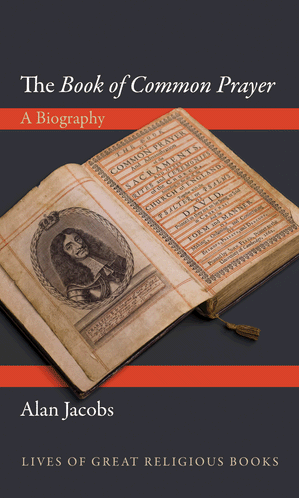
Screen shot 2014-06-11 at 9.48.16 PMAlan Jacobs, a professor of humanities at Baylor University, has written a beautiful and wise book about The Book of Common Prayer and its many iterations since it’s initial publication by Thomas Cranmer in 1549. It is both a feat of compression, bringing 500 years of history into the scope of some 230 pages, and of scholarship, gracefully knitting together several course strands of literary, liturgical, and ecclesiastical history. And yet somehow Jacobs maintains an effortlessness, a gracefulness of style, that is rare in academia. Continue reading “Alan Jacobs and the Book of Common Prayer”