Reading Through Grief

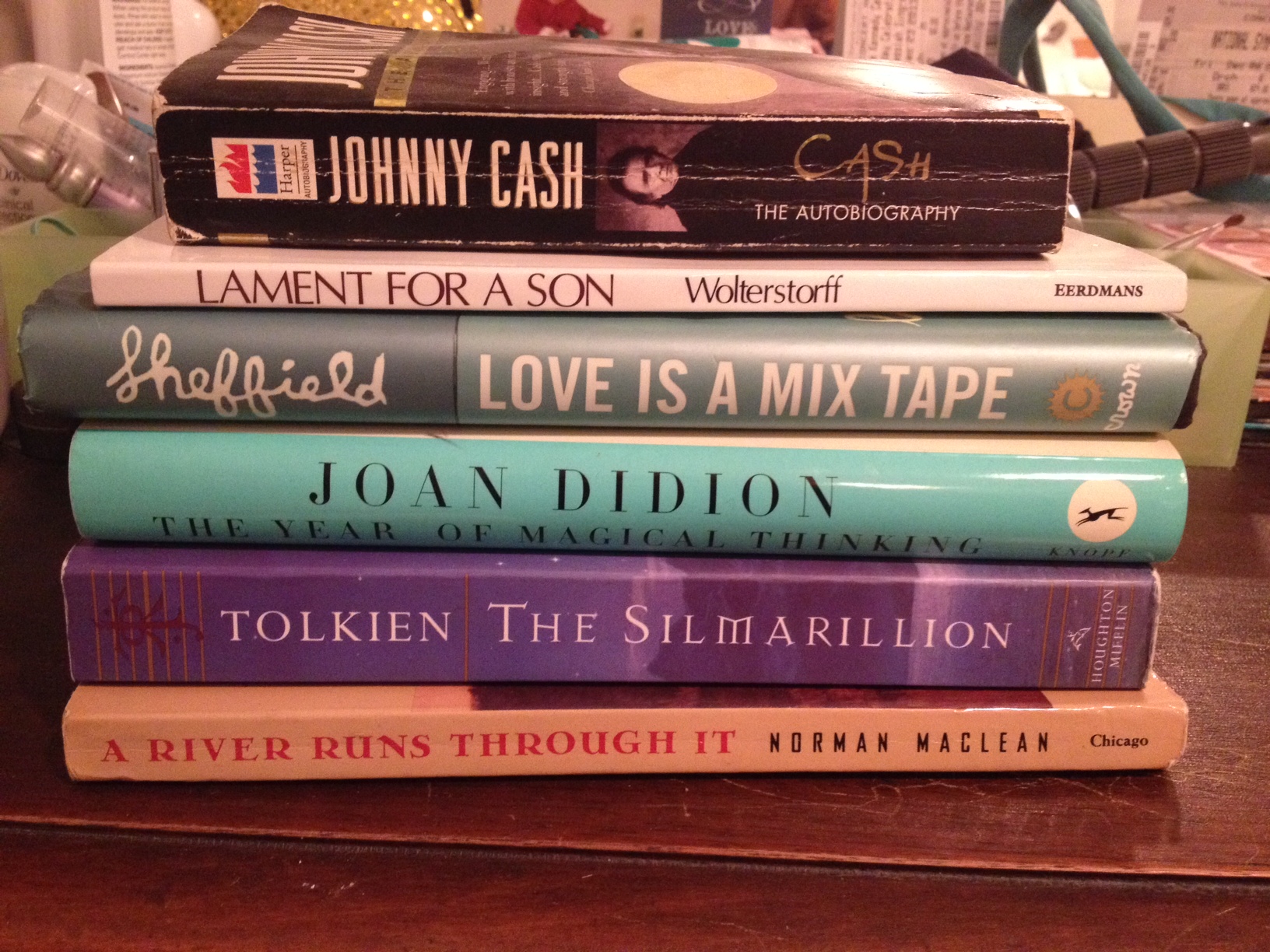
photo-26Shortly after my father died, a friend at work offered me a lovely gift, her reading list of books about mourning and fathers. She enclosed a photograph of a stack of books. To see them like this, their thoughtful designs and well-worn bindings, was a strange comfort at a time when words seemed unreal or elusive.

Her advice was “to find expression for your own grief through the words of others. . . . It can help to explore the emotions of grief and sorrow by reading other travelers who have been thrust into that same strange land and know the lay of it. Every grief is still unique, just as every love is, but these words from further up and further in can bring strength and comfort—and certainly catharsis.”

Continue reading “Reading Through Grief”

Worship by Default

In his book God Is Not One, Boston University religion professor Stephen Prothero tries to get at the distinctive characteristics of the major world religions by setting out a key problem that each tries to solve. The problem in Christianity is sin; the solution, or goal, is salvation. In Prothero’s telling, “sin refers more generally to the human propensity toward wrongdoing and evil. . . But happily Christianity is a ‘rescue religion,’ and this rescue was made possible as Jesus was dying on the cross. . . . The ‘good news,’ therefore, is that anyone who hears this story, confesses her sins, and turns to Jesus for forgiveness can be saved. Or, as the Bible puts it, ‘the wages of sin is death; but the gift of God is eternal life in Christ Jesus our Lord’ (Romans 6:23)” (pp. 14, 71–2).

But what is sin? Continue reading “Worship by Default”

Notable Reading

  • Tim Blanning, The Romantic Revolution: A History (Modern Library, 2010)—An outstanding overview of the early 19th-century cultural movement known as romanticism. A writer at the height of his craft, Blanning casts a wide net, surveying a huge corpus of art, literature, and music both in England and the continent, but creates an astonishingly tight and compelling account in a mere 200 pages. Blanning’s history surely trumps M. H. Abram’s 1971 classic The Mirror and the Lamp in its accessibility and scope. It reminded me why I became so fond of the “long eighteenth century” (from which the romantics emerged), and it left me eager to dig into Blanning’s ambitious The Pursuit of Glory.

Continue reading “Notable Reading”